How long does grass seed take to grow? Most lawn grasses germinate in 5 to 21 days, and a new lawn is ready for its first mow about four to six weeks after sowing, according to the University of Maryland Extension. A few species test your patience — Kentucky bluegrass can sit invisible for a full month and still be perfectly fine, per University of California turf data. Below: exact germination times by grass type, a week-by-week picture of what you should see out there, and a checkpoint plan for the day you start wondering whether to reseed.
How long does grass seed take to germinate?
Grass seed germination time runs from 5 to 30 days, depending on species. Perennial ryegrass sprouts in 5–10 days, tall fescue in 7–12, fine fescues in 7–14, and Kentucky bluegrass in 14–30, per the University of California's Guide to Healthy Lawns. Warm-season Bermuda grass needs 10–30 days, and centipede grass about 28.
| Grass type | Days to germinate | Notes |
|---|---|---|
| Perennial ryegrass | 5–10 | The sprinter — often added to mixes as a nurse grass (UC IPM) |
| Tall fescue | 7–12 | Deep roots make it durable once it's up |
| Fine fescues (creeping red, chewings, hard) | 7–14 | The low-water, shade-tolerant group |
| Eco-Lawn fine fescue blend | 7–14 | Quick to germinate, then slow-growing by design — from the Eco-Lawn grass seed label |
| Kentucky bluegrass | 14–30 | Slowest cool-season starter; it spreads to repair itself later (UC IPM) |
| Bermuda grass | 10–30 | Hulled seed sprouts faster than unhulled, notes Clemson Extension |
| Buffalo grass | 14–30 | Native prairie option for full sun |
| Centipede grass | ~28 | Slow to sprout and slow to spread, per NC State Extension — see our centipede grass guide |
| White clover & microclover | 7–14 | Not a grass, but a popular eco lawn — see our clover lawn guide |
These ranges assume seed sown in the right season, into soil warm enough for the species — the factors section below covers what pushes you toward the fast or slow end.
Two rows deserve a second look. Perennial ryegrass germination time is short enough that seed blenders use it as a nurse grass: it comes up first, holds the soil, and shelters slower neighbors. Kentucky bluegrass germination time sits at the other extreme — two to four weeks of bare dirt is standard, and reseeding at day 15 just wastes seed.
Grass growth stages: a week-by-week timeline
How fast does grass grow from seed? Fast enough to mow in four to six weeks under good conditions, per the University of Maryland Extension — but the first two weeks happen mostly out of sight. Here's what a normal seeding looks like, week by week.
| Grass growth stages | What you should see | What's actually happening |
|---|---|---|
| Week 0–1 | Nothing. Bare soil. | Germination starts underground: the root emerges first, then the shoot. Resist the urge to dig around and check. |
| Week 1–2 | First green fuzz from ryegrass, tall fescue, and fine fescue blends. Bluegrass: still nothing — normal. | Seedlings are living off seed reserves while roots take hold. |
| Week 2–4 | Patchy green filling in; early sprouts reach 2–3 inches (5–8 cm). Thin spots become obvious. | Slower seeds are still arriving. Germination staggers, so don't judge coverage yet. |
| Week 4–6 | Grass hits about 3 inches (7.5 cm) — time for the first mow. It finally looks like a lawn. | Roots are deepening; mowing encourages the plants to thicken and spread. |
| Week 6–8+ | Even color, fewer gaps. Light foot traffic is fine once bare soil no longer shows. | Establishment continues below ground for a full season or more. |
One caveat on the last row: looking like a lawn and being established are different things. Penn State Extension notes that a late-summer seeding needs two cool growing seasons — fall plus the following spring — before it's truly settled in. So how long does it take for grass to grow from bare soil into a lawn that shrugs off kids and dogs? Sprouts inside three weeks, a first mow inside six, real durability by next season.
If you overseeded rather than starting bare, your lawn will look "done" sooner — the established grass hides the gaps while new seedlings catch up underneath.
What affects how fast grass seed grows?
Species sets the baseline, but four site factors decide where in its range your seed lands. Together they explain most of the gap between a neighbor's 6-day ryegrass and your 12-day version of the same bag — and most of the variation in how long grass seed takes to grow on any given lawn.

Soil temperature: what temperature does grass seed germinate at?
Cool-season grasses — fescues, ryegrass, Kentucky bluegrass — germinate best when soil an inch down reads 50–70°F (10–21°C), per the University of Maryland Extension. Warm-season grasses like Bermuda and buffalo grass want upper-soil temperatures averaging 68°F (20°C) or higher, per Oklahoma State University. Grass seed germination temperature is the single biggest speed lever: warm soil within the range means days, cold soil means weeks. Seed sown into soil that's too cold doesn't die — Penn State Extension notes it simply won't germinate until things warm up. It waits. Sowing inside the right seasonal window puts soil temperature on your side from day one; our guide to when to plant grass seed covers those windows by season and region.
Moisture
Seed must stay consistently damp from sowing until sprouts appear. A seed that swells with water and then dries out mid-germination dies — there's no pausing the process. Michigan State University Extension puts it simply: frequent light watering promotes germination, while a seedbed that dries out — or gets flooded until seed washes away — sets you back to zero. A thin straw mulch helps the surface hold moisture between waterings.
Seed-to-soil contact and prep
Seed nestled into loosened topsoil sprouts days ahead of seed dropped onto hard crust. A light raking that buries seed no more than about ¼ inch (6 mm), per Iowa State University Extension, or a thin topdressing of finished compost gives each seed the soil contact it needs. Don't overdo the burying: grass seed needs light, and the University of Maryland Extension warns against covering it with more than about ¼ inch of compost.
Seed quality and sunlight
Fresh seed germinates at higher rates — the University of Maryland Extension lists old seed near or past its sell-by date among the top reasons lawns come up thin. Sunlight matters too: dense shade slows everything, even the shade-tolerant fine fescues. Under a heavy tree canopy, expect the slow end of every range in the table above.
Why is my grass seed not growing?
Day 12, and you're still looking at bare dirt. We know exactly where your head goes next — this is the moment how long does grass seed take to grow quietly turns into is my grass seed dead. Take a breath, because the first rule is simple: give any seed its full species window before you write it off. Kentucky bluegrass can take 30 days, per UC IPM, and nothing you buy or spray changes that. Most of the "failed" seedings people ask us about turn out to be slow species doing exactly what slow species do. So rather than checking the lawn every morning and worrying, use these checkpoints:
- Day 10: Perennial ryegrass and tall fescue should show green. If not, check moisture first — has the surface stayed damp every single day? One dry weekend mid-germination can quietly kill a seeding.
- Day 21: Everything except Kentucky bluegrass and buffalo grass should be up. If it isn't, work the diagnosis list: soil still too cold for the species (soil temperature explains most cold-climate failures), seed buried deeper than ¼ inch (Iowa State recommends ⅛–¼ inch), seed washed into low spots by hard rain, birds feeding on surface seed, or an old bag with a fading germination rate.
- Day 30+: Nothing at all, anywhere? Waiting longer won't help. Fix the cause you diagnosed — then reseed.
The wait-or-reseed call is easier than it feels. If some seedlings are showing, wait: germination staggers over weeks, and thin areas usually thicken. If the ground is genuinely bare at a month, the seeding failed; a diagnosed redo beats hopeful staring.
How to make grass seed grow faster
You can't push biology past its range — but five levers reliably move a seeding toward the fast end. Choose a mix with a quick nurse grass like perennial ryegrass (5–10 days to green). Sow when soil temperature is already in your grass's sweet spot — that's a timing question, and it's the one lever you pull before the seed leaves the bag. Rake for firm seed-to-soil contact. Keep the surface damp without fail. And feed the seedbed the organic way, with compost or an organic starter amendment, rather than pushing synthetic quick-fix fertilizer — gentler on the soil life your seedlings depend on.
From my own yard
I once watched a landscaper pouring bags of topsoil over what looked like a perfectly good lawn. When I asked him about it, he said they had just overseeded, and the topsoil would keep the seed from drying out and encourage germination — not to mention stop the birds from snatching it. I tried it, and lo and behold, it worked like a charm: the seed sprouted faster and needed watering less often. It's been my go-to practice for overseeding and patching bare spots ever since.
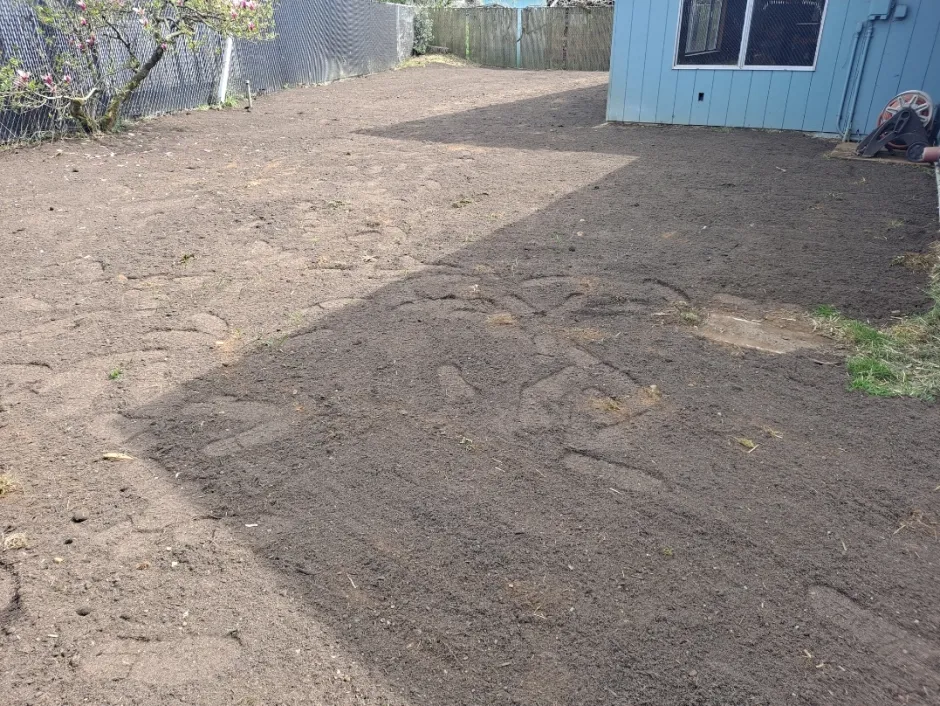
The key is keeping that layer light — usually no more than ¼ inch (6 mm) — otherwise the grass may not emerge at all. For varieties that don't tolerate any soil coverage, sprinkling a little topsoil onto the lawn before raking the seed in can still be worth it, especially if your soil is compacted: it improves seed-to-soil contact without burying anything.
Pro tip: keep the soil from spent planters and finished projects around the yard, so you don't have to buy a plastic bag of topsoil every time you need to overseed. Mix in some compost for a boost.
Be skeptical of anything promising more. No coating, tonic, or "miracle" product makes Kentucky bluegrass sprout in five days. If speed matters most, buy a faster species — not a faster promise.
How long after planting grass seed can you mow (or walk on it)?
Mow for the first time when new grass reaches about 3 inches (7.5 cm) — Iowa State University says to cut it back to 2–2.5 inches — which typically lands four to six weeks after seeding, per the University of Maryland Extension.

Use a sharp blade, mow when the grass is dry, and never remove more than one-third of the blade in one pass, per the UC Guide to Healthy Lawns — young plants pull out of loose soil easily.
Walking is a separate clearance. Michigan State University Extension advises keeping traffic off until the turf has filled in enough that you can't see soil between plants — in practice, after the first two or three mowings. Fall-seeded lawns earn full play-on-it status the following season, once establishment is complete.
Does overseeding grow in faster than a new lawn?

Germination runs on the same species clock either way: ryegrass still takes 5–10 days over an existing lawn, and bluegrass still makes you wait. But the seed does care what it lands on — it has to reach soil rather than sit on thatch or perch on top of existing blades, which is why overseeding still calls for raking, dethatching, or a light topdressing first. So how long grass seed takes to grow when overseeding comes down to that same species timeline, with one difference in your favor: the wait simply looks better, because established grass hides bare soil while the new seedlings fill in the thin spots. Overseeding also takes roughly half the seed of a bare-soil start, according to Cooperative Extension guidance. Our grass seed calculator computes both modes, so you buy once and buy right.
How much seed does your lawn need?
How long grass seed takes to grow is set by biology — but coverage is math. Enter your lawn's square footage and grass type into our free grass seed calculator and it returns the exact pounds of seed for your project, whether you're starting a new lawn from bare soil or overseeding a thin one. No guessing at the garden center, no half-empty bag regrets.
Calculate how much seed you need →FAQ: quick answers on grass seed growth
Will grass seed germinate on top of the soil?
Some of it will, but expect thin results. Surface seed dries out between waterings and feeds the birds, and grass seed needs steady moisture plus soil contact to sprout. Raking it in — no deeper than ¼ inch (6 mm), per Iowa State University — beats throwing and hoping.
How long does grass seed take to grow in spring vs. fall?
The species clock doesn't change; soil temperature does. Seed in warm early-fall soil germinates near the fast end of its range, while the same seed in cold spring soil crawls, since cold soils slow germination. For which month to sow in your region, see our guide to when to plant grass seed.
How long until an eco-lawn or clover lawn fills in?
Eco-Lawn grass seed germinates in 7–14 days per its label, reaches first-cut height in about 4–6 weeks, then thickens gradually — it's bred to grow slowly. We cover the full first year, from our own plantings, in how long an eco-lawn takes to grow.
Is sod faster than seed?
For looks, yes — sod is green the day it's laid, while seed needs weeks. For roots, less than you'd think: sod still needs weeks to knit into the soil before it handles real use. Costs and trade-offs are in our sod vs. seed comparison.
Does old grass seed still grow?
Usually some of it does — but germination rates drop as seed ages, which is why the University of Maryland Extension lists old seed among the most common reasons a lawn comes up thin.
